A clean gelcoat, fresh bottom paint and a shiny interior can make a used boat look like a bargain. But those surface details do not tell you what is happening underneath. A pre purchase boat inspection can uncover structural concerns that are easy to miss during a quick walk-around or test drive. For buyers in Alabama and across the Southeast, where boats regularly deal with sun, moisture, rough water and long periods of storage, knowing what is behind the finish matters.
The real concern is not a few scratches. It is paying a premium for a boat that later needs major fiberglass work, structural repairs or a complete hull restoration.
That is where a professional inspection earns its keep.
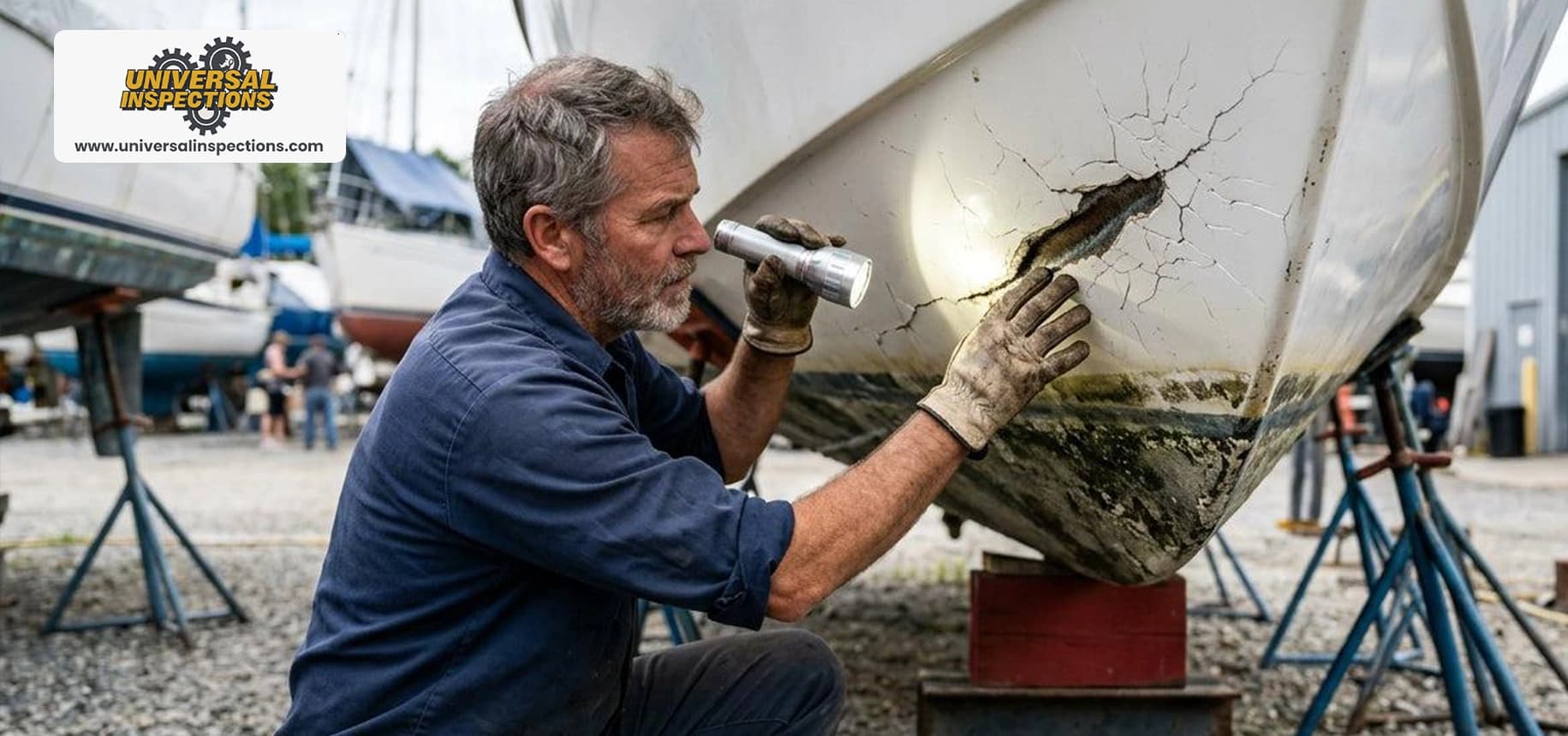
Before buying, look closely at the hull rather than simply admiring the boat's appearance.
Watch for:
Stress cracks around the transom, chines, keel and fittings
Blisters or bubbling below the waterline
Areas that appear recently repaired or repainted
Uneven gelcoat or suspicious patches
Soft spots in accessible structural areas
Signs of impact around the keel or bow
Water intrusion around through-hull fittings
A boat can have cosmetic repairs that look perfectly fine from several feet away. The concern is whether the repair addressed the underlying structural problem or simply covered it up.
Some of the most expensive problems are not sitting out in plain sight.
The transom, stringers and bulkheads provide important structural support. Moisture intrusion, deterioration or previous impact damage can weaken these areas without producing an obvious visual warning.
This is one reason a professional boat hull inspection should go beyond looking at the exterior. Depending on the vessel and inspection scope, a qualified inspector may use moisture testing, sounding techniques and close visual examination to identify areas that deserve further investigation.
ABYC identifies hull and deck structures, through-hull fittings, seacocks and related components among important areas covered by its marine standards.
A small crack does not automatically mean the boat is unsafe or needs a major repair. But the location, pattern and cause matter.
For example, cracking around a high-stress area could indicate movement or structural stress rather than simple cosmetic aging. Likewise, a repaired section may require closer examination if there is evidence of impact or water intrusion.
The danger for a buyer is simple: you may negotiate based on what you can see while missing the much larger repair hiding underneath.
Moisture can enter through damaged fittings, penetrations, cracks and failed seals. In composite construction, prolonged moisture exposure can contribute to deterioration and delamination in affected areas.
Red flags include:
Unusual moisture readings
Soft or spongy sections
Changes in sound when tapped
Cracking around fittings
Evidence of previous repairs
Persistent water in areas that should remain dry
A professional pre purchase marine inspection helps put those observations into context instead of leaving you to guess whether a problem is cosmetic, maintenance-related or potentially structural.
When you're standing beside a boat you really want, it's easy to see the positives and rationalize the negatives. That's exactly when an independent inspection matters.
A proper pre purchase marine inspection can assess the vessel's condition and identify issues that may affect safety, reliability, value or future repair costs. ABYC describes a pre-purchase survey as a comprehensive condition and valuation assessment that may include operational testing and a sea trial.
A professional evaluation can help you understand:
Whether visible hull damage appears cosmetic or warrants further investigation
The condition of accessible structural components
Evidence of previous impact or repairs
Potential moisture-related concerns
Condition of through-hull fittings and related components
Mechanical and electrical issues that could add to the ownership cost
Whether the asking price makes sense considering the vessel's condition
The goal isn't to kill the deal. It's to make sure you know what deal you're actually making.

Universal Inspections provides marine inspection services designed to give buyers a clearer picture before committing to a vessel. The company provides detailed reports and serves customers across its inspection network, including Alabama, Mississippi and Tennessee.
If the inspection identifies significant concerns, you have information you can use to negotiate repairs, adjust the purchase price or walk away.
That's a whole lot better than finding out about a serious hull problem after the boat is sitting in your driveway.
A boat can look beautiful at the dock and still hide damage that could cost thousands to correct. Cracks, moisture, delamination, previous impact repairs and weakened structural components deserve more than a quick visual check.
A professional pre purchase boat inspection gives you facts before you commit your money. Universal Inspections combines detailed inspection reporting with practical evaluation to help buyers make a smarter decision.
Whether you're looking at a fishing boat, cruiser, pontoon or another marine vessel, get the hull checked before the seller gets your money.
A professional boat hull inspection looks for visible cracks, blisters, impact damage, repairs, moisture concerns, structural abnormalities and other conditions that may affect the vessel's integrity. The exact inspection scope depends on the vessel and agreed services.
Yes. A pre purchase marine inspection can identify problems that may be expensive to repair after purchase. It also gives buyers useful information for negotiating the purchase price or deciding whether to walk away from a questionable vessel.
You can book inspection online with Universal Inspections before completing your boat purchase. Their marine inspection services are intended to give buyers an independent assessment of the vessel's condition before they commit to the deal.