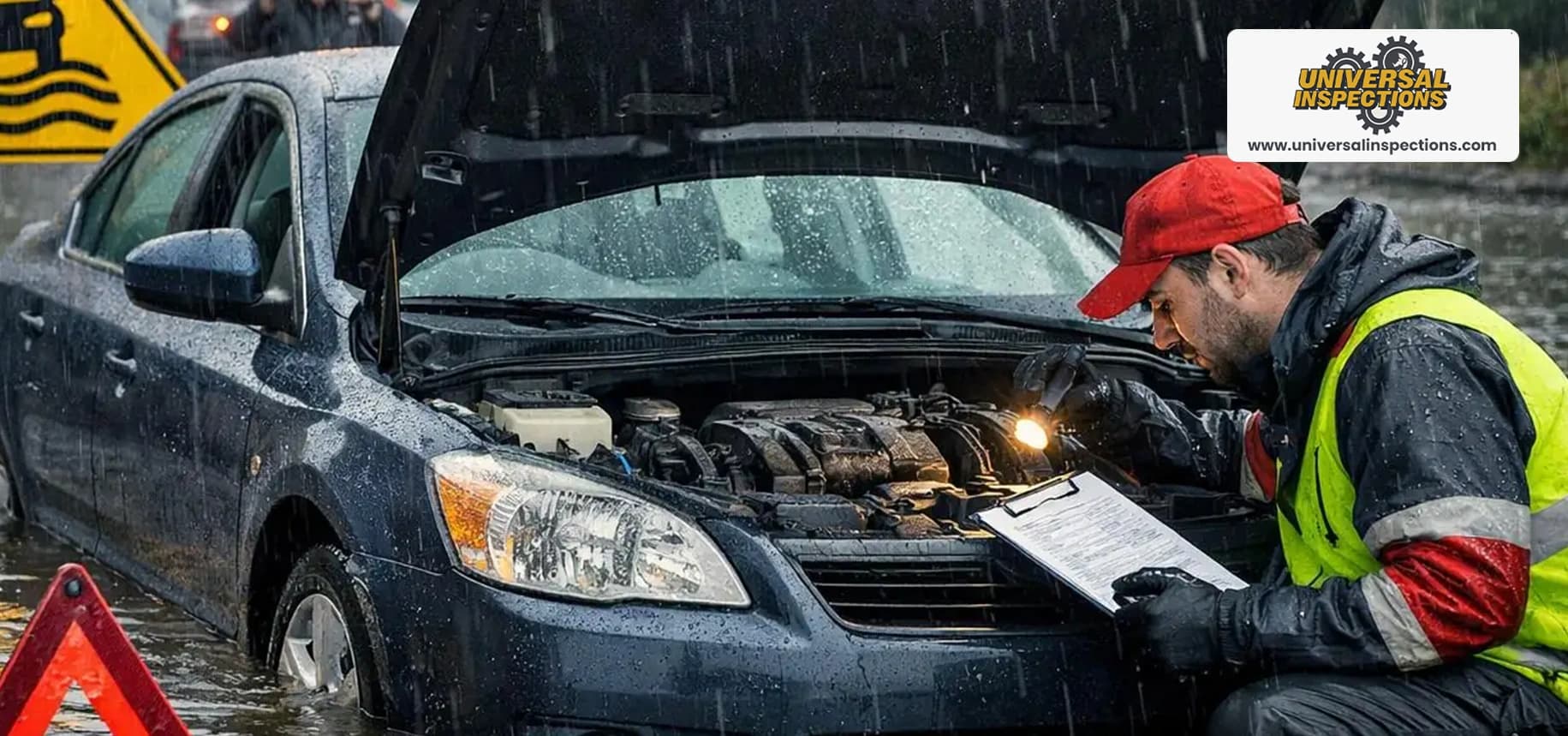
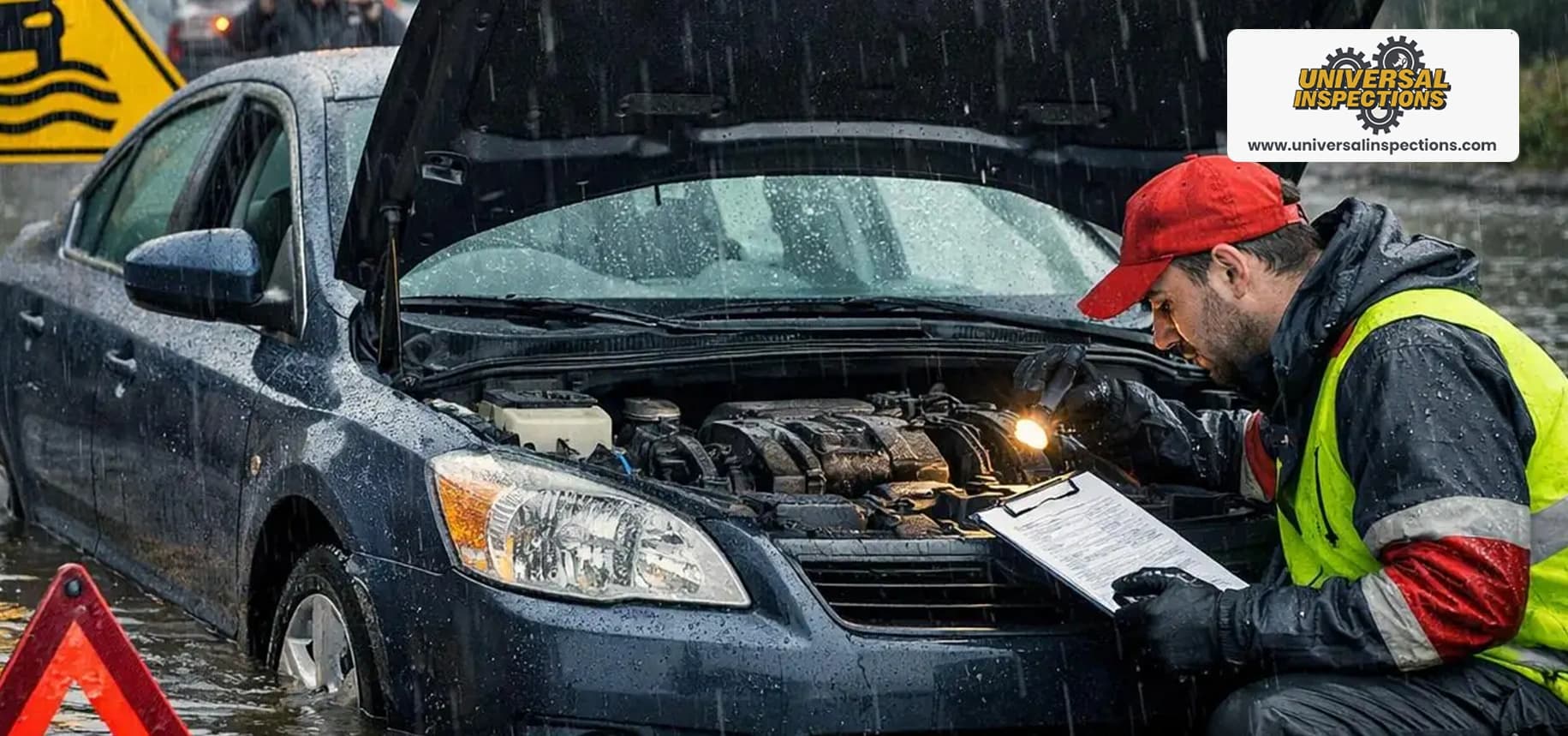
Alabama sits close enough to the Gulf Coast that flood-damaged vehicles have a way of finding their way onto local used car lots. Sometimes these vehicles are shipped in from states hit hardest by hurricanes and tropical storms. A flooded car can look perfectly fine on the surface while hiding serious problems underneath, like corroded wiring, moldy upholstery, and mechanical failures. These issues may show up months after you’ve signed the paperwork.
The good news? With a careful eye and a professional pre-purchase car inspection, flood damage is usually caught before you hand over a single dollar. In this blog, we will cover which things to check before you finalize your car purchase.
A little surface rust on an older car is normal. Rust in hidden spots is not. Check the strut towers under the hood, the seat frames, and seat tracks inside the cabin. Look for small drip holes along the bottom of the doors. If you find unusual corrosion in areas that normally stay dry, especially inside the cabin or on seat hardware, it may indicate previous water exposure or flooding.
Pull back the floor mats and take a close look at the carpet. Check the area around the center console and door panels. A faint stain from a spilled drink is one thing. But a clear waterline ring more than a few inches up the console or door trim tells a different story. Also check whether the carpet looks brand new while the rest of the interior looks worn. If you find mismatched materials, this may be a sign of flood repairs.
Some underbody corrosion is normal depending on a vehicle's age and where it has been driven. What deserves closer attention is corrosion that seems unusually severe for the vehicle’s age, especially when combined with trapped mud, silt, or evidence of water intrusion.
Surface rust on the rotors after sitting overnight is normal. What’s not normal is rust on the brake calipers, brake line connections, or a wheel hub and spindle that look brown and flaky. Light surface rust on brake rotors can appear even after normal rain or overnight parking. More concerning is widespread or unusual corrosion on hardware, electrical connectors, brake-line fittings, suspension components, and normally protected areas, especially when other signs of water intrusion are present.
Water and electronics are a bad mix. In fact, corrosion from flood exposure often shows up gradually for accessories that work occasionally, like power windows, seat adjusters, infotainment systems, and so on. Test every electrical feature you can: windows, locks, mirrors, seat controls, dashboard displays, infotainment, lights, cameras, sensors, and climate controls. These issues can appear right away or months down the road as corrosion spreads through wiring and connectors.
Services like Carfax and AutoCheck are useful starting points, but they rely on damage being reported. However, plenty of flood-damaged vehicles slip through the cracks. Sellers can move a car across state lines, retitle it, or repair it through a shop that never reports the damage. A “clean” title doesn’t guarantee a clean history. That’s why a vehicle history report and a professional pre-purchase vehicle inspection should complement each other rather than replace one another.
Before buying, run the VIN through NICB’s free VINCheck service and review the vehicle’s title history. Keep in mind that no history database is complete, so these checks should complement, not replace, a physical pre-purchase inspection.
At Universal Inspections, we understand how much is riding on a used vehicle purchase. Our certified inspectors go beyond a quick walk-around, using inspection protocols and modern diagnostic tools. Their evaluation can help identify warning signs that deserve closer investigation, including unusual corrosion, electrical problems, and evidence of previous water exposure.
A full assessment of the overall vehicle condition.
Identification of potential safety concerns
Evaluation of mechanical and structural integrity
A detailed report with photographic evidence, so you know exactly what you’re looking at.
Whether you’re buying for yourself, for a family member, or sourcing vehicles for your dealership, our goal is simple. We give you unbiased and accurate information regarding the vehicles you need to buy with confidence.

A flood-damaged car can cost thousands in repairs, put your entire family’s safety at risk, and leave you stuck with a vehicle that’s nearly impossible to resell. Before you buy your next used in Alabama, let our certified technicians take a closer look.
Inspect the used car’s seat tracks, under-dash wiring, and door frames for rust, mud, or silt deposits. Smell the interior for musty odors, look for upholstery damage, and test all electrical components for intermittent failures. A professional pre-purchase vehicle inspection reveals hidden corrosion and mechanical damage beneath the surface.
A dealer’s inspection is performed for a different purpose and may not provide the independent assessment a prospective buyer wants. Hiring an independent inspector from Universal Inspections gives you a third-party evaluation focused on the vehicle’s condition before purchase.
Book your pre-purchase car inspection online through Universal Inspections or call toll-free at 1-833-935-1888. All you have to do is provide us with the vehicle’s location and seller details, and our certified inspectors will handle the rest.