When you arrive at an RV site after a long drive, step out, and you know that your temporary home is comfy and ready to stay in. However, campsite setup can be more stressful than expected for many travelers, particularly for first-time RV owners. Uneven ground, electrical hookups, water connections, and storage adjustments all require attention before anyone can truly relax.
This is the reason many buyers consider a Pre - Purchase RV inspection before investing in a motorhome or trailer.
Before connecting anything, take a few minutes to assess the campsite carefully.
Look for:
Uneven ground
Low tree branches
Soft or muddy ground
Nearby utility hookups
Slide-out clearance space
If the Parking ground is uneven, this could impact the performance of appliances, particularly refrigerators that depend on balanced positioning. If necessary, use leveling blocks and check that the RV is stable before extending slides and roofs.
You want the hookup side of the RV positioned close enough to utilities without stretching hoses or cords too tightly.
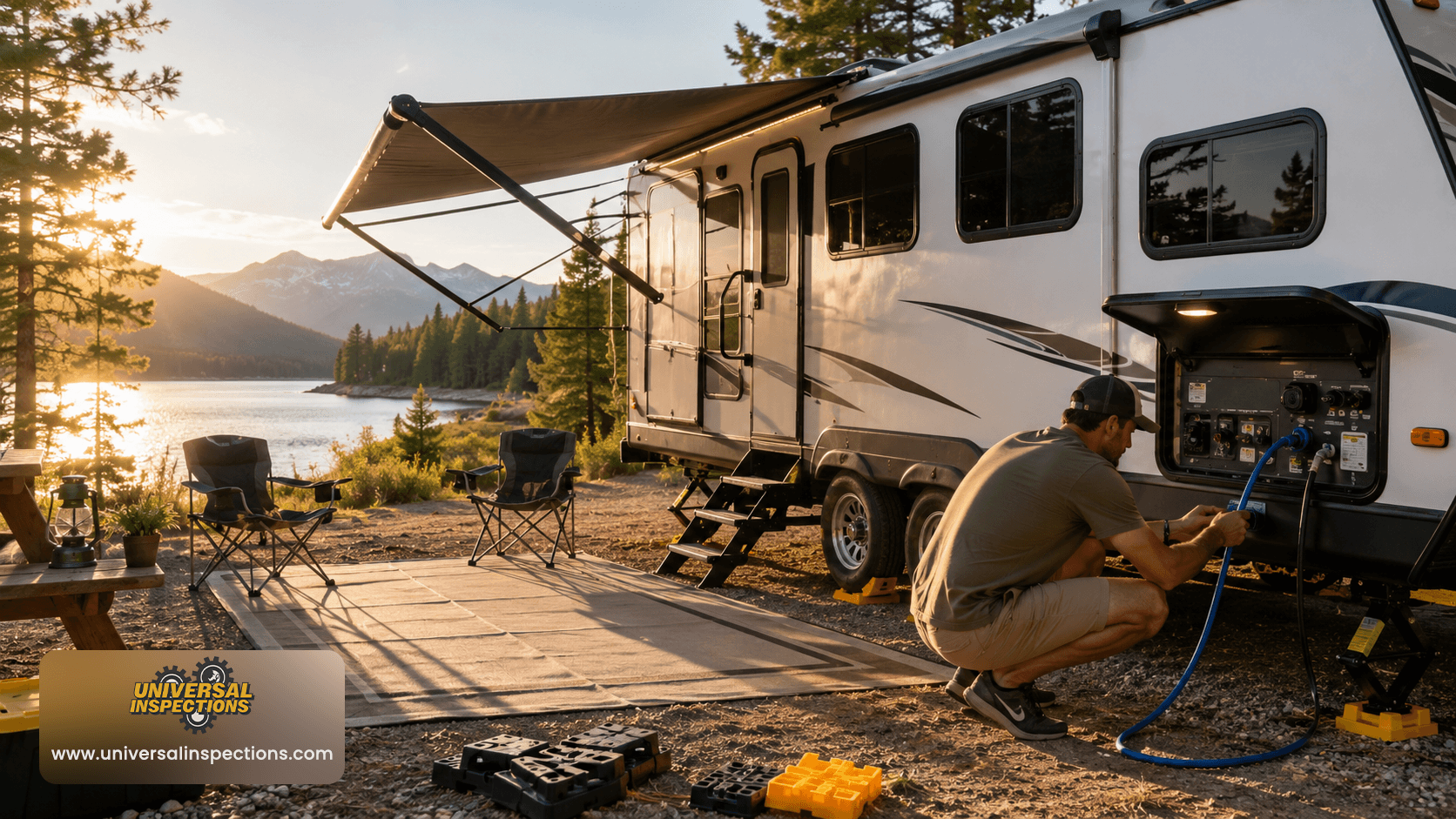
Once the RV has a secure parking spot, secure the RV prior to setting up any outdoor items or interior sections.
Follow this sequence:
Level side-to-side
Level front-to-back
Deploy wheel chocks
Lower stabilizer jacks
Skipping wheel chocks can create unnecessary movement inside the RV, especially when people walk around at night.
A quality Pre - Purchase RV inspection often identifies suspension issues or jack problems before they become noticeable during campsite setup.
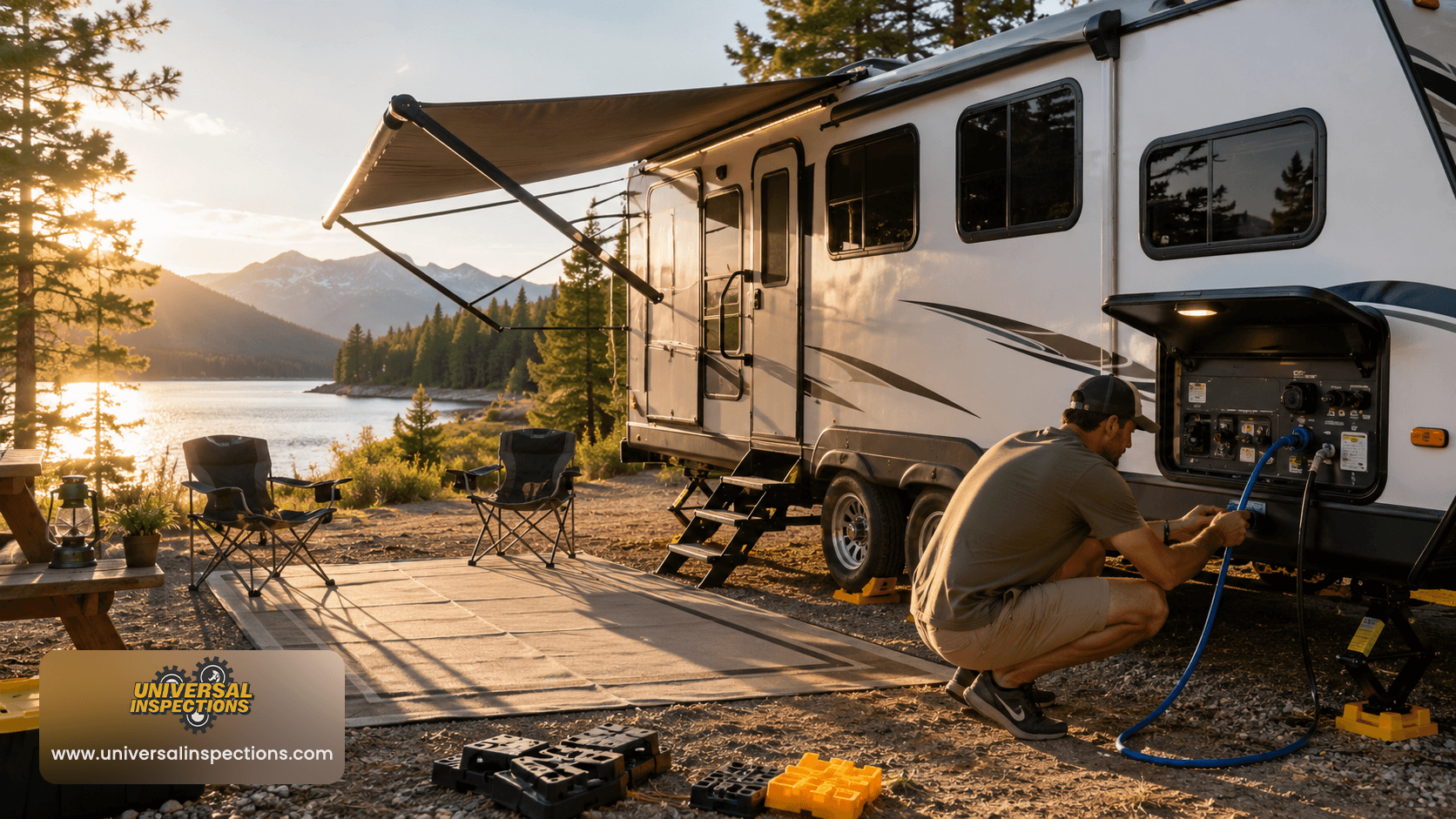
Utility setup should always be done carefully. Rushing electrical or sewer connections creates avoidable problems.
Before plugging into shore power:
Turn the campground breaker OFF
Use a surge protector
Confirm voltage compatibility
Inspect cords for damage
Campground power fluctuations can damage appliances and electronics. A surge protector adds an important layer of protection for appliances and electronics.
When connecting water:
Use a pressure regulator
Attach a clean drinking-water hose
Check for leaks immediately
For sewer connections:
Make sure fittings are tightly secured
Keep the sewer hose supported
Keep gray tank valves closed until almost full
These small habits help reduce odors, leaks, and unnecessary cleanup later.
After the technical setup is complete, focus on comfort and convenience. A well-organized campsite makes longer stays far more enjoyable.
Many experienced RV owners keep a quick-access storage bin containing:
Outdoor chairs
Patio mat
Flashlights
Extra leveling blocks
Extension cords
Avoid overcrowding the campsite with gear. Maintain clear walking paths around stairs, hookups, and fire pits.
If traveling with children or pets, check that:
Awnings are secure in windy weather
Electrical cords remain covered
Campfires stay fully supervised
A smooth campsite setup often begins long before the trip starts. Travel plans can be easily disturbed by mechanical problems, undetected leaks, or electrical problems.
That’s why many buyers arrange a Pre - Purchase RV inspection before investing in an RV, especially used models. An inspection is a great tool for finding out structural damage, appliance failures, roof problems, plumbing leaks, and electrical issues that may not be obvious after a casual walkthrough.

An organized RV campsite setup creates a more relaxing travel experience from the moment you arrive. By positioning and connecting your utilities properly and following a consistent routine, you can avoid unnecessary stress and damage to your RV.
Small details matter more than most travelers expect. A proper leveling, proper hookups and preparing critical equipment will make each stop smoother and more comfortable. And before any road trip even begins, a reliable Pre - Purchase RV inspection remains one of the smartest ways to avoid costly surprises later.
1. How long does RV campsite setup usually take?
For most travelers, RV campsite setup takes around 30 to 60 minutes, depending on the size of the RV and the type of hookups available at the campground.
2. Why is leveling important for an RV?
Leveling ensures that appliances operate properly, enhances comfort in the RV, and keeps the vehicle's frame and suspension in good shape.
3. Should first-time buyers get an RV inspection?
Yes, first-time buyers should strongly consider a Pre - Purchase RV inspection. It can identify expensive mechanical or structural problems that may not be visible during a basic walkthrough.