Most vehicle owners only think about emission tests when a renewal notice lands in their mailbox, or worse, when they fail one. But the vehicle inspection emission test is far more than a bureaucratic checkbox. It provides you with a window into your vehicle's mechanical condition, and knowing what it is can help you avoid getting stuck with unanticipated repair costs, registration delays, and stress.
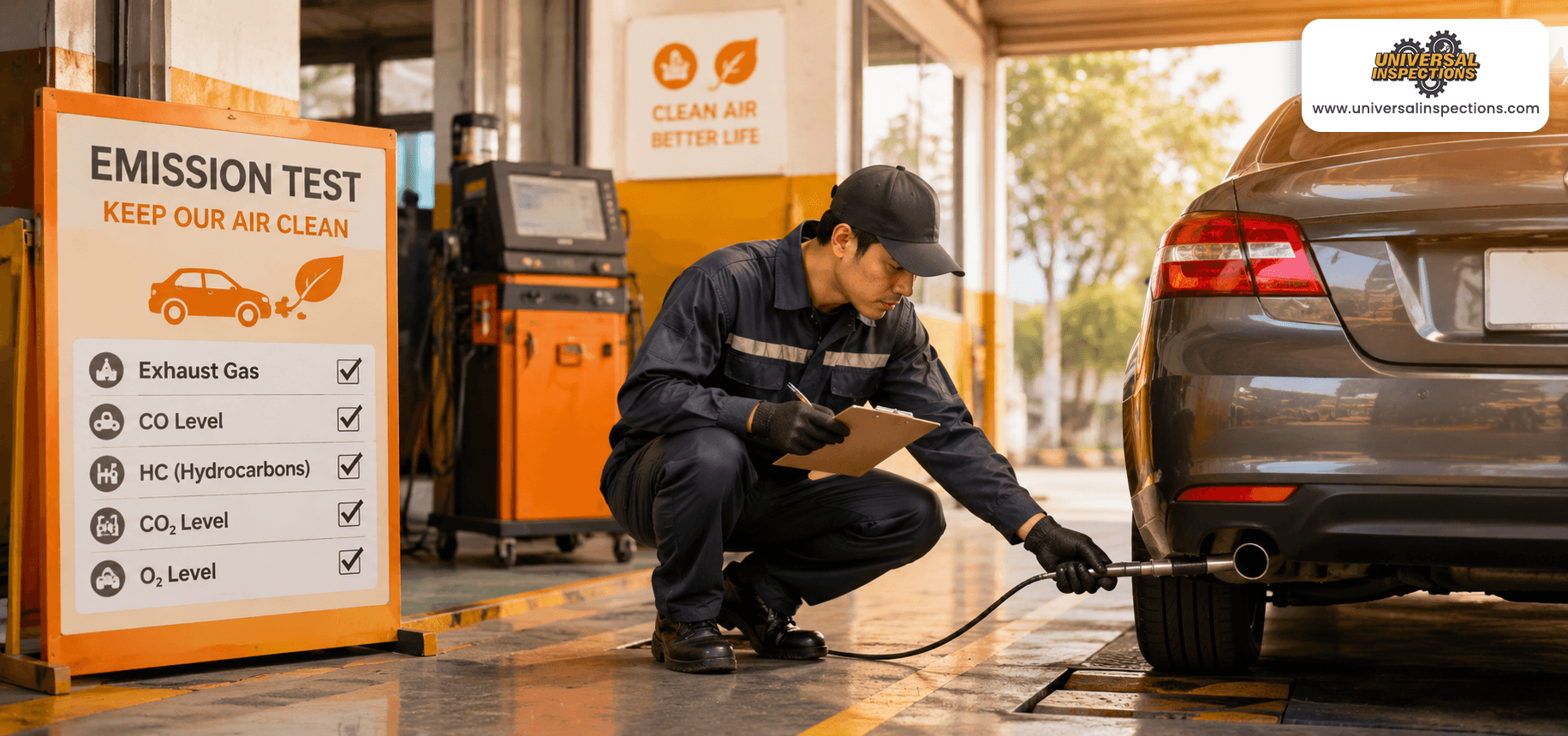
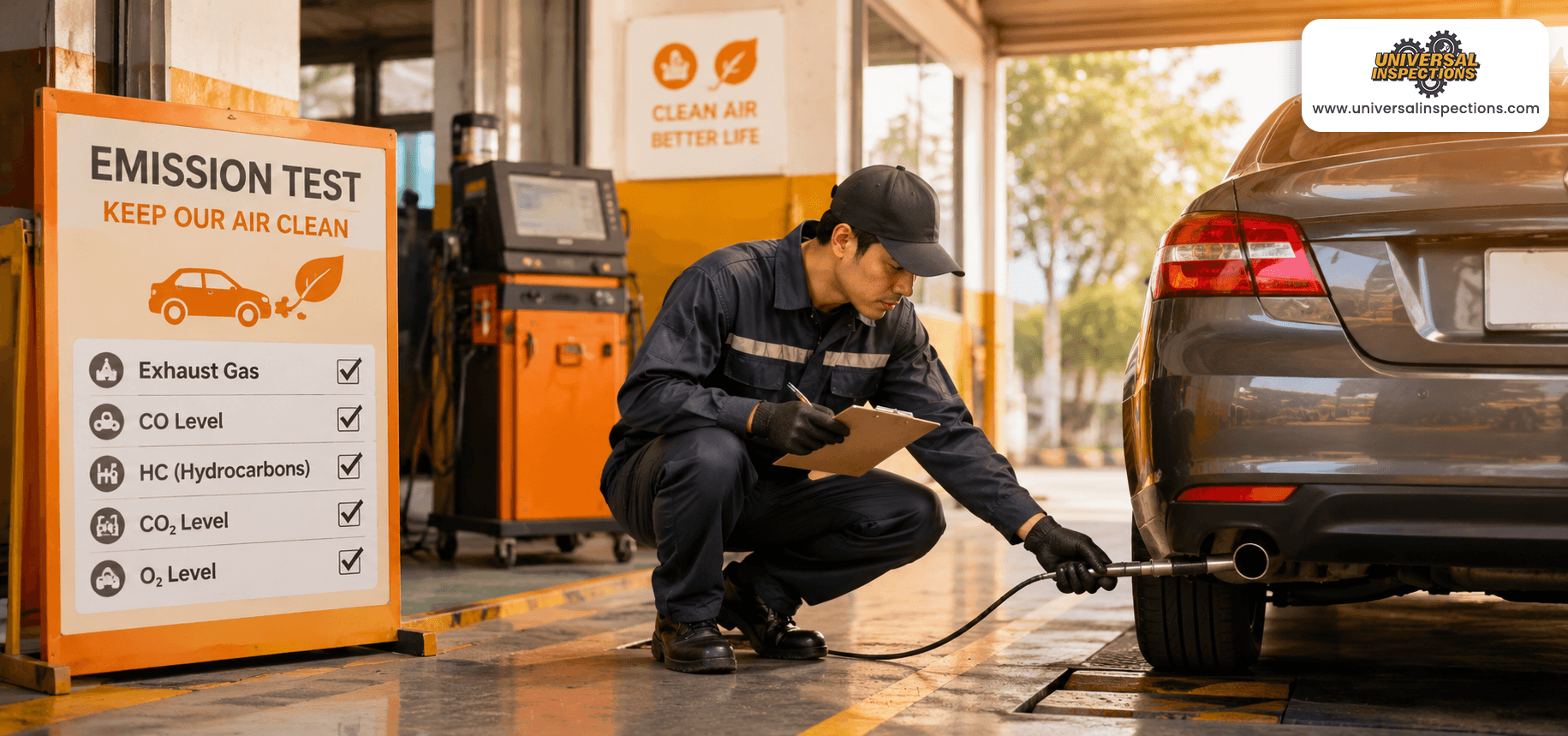
An emission test is a systematic assessment that measures the level of pollutants your vehicle releases through its exhaust system. The limits for gases such as carbon monoxide (CO), hydrocarbons (HC), nitrogen oxides (NOx), and particulate matter are established by regulators and environmental agencies. If your vehicle's output is greater than these, it fails; plain and simple.
Most modern testing facilities use an On-Board Diagnostics (OBD-II) scanner to read your vehicle's internal data directly, while older vehicles may still go through a tailpipe probe test.
An emission test is more than a requirement for registration. High emission readings can be the first sign of a problem, such as a misfiring engine, plugged catalytic converter, or a bad oxygen sensor, and if left unchecked, can be expensive problems to fix.
Failures rarely happen out of nowhere. In most cases, there are identifiable causes that a vehicle owner could have caught earlier. The most frequently seen issues include:
A faulty or aging oxygen sensor disrupts the air-fuel mixture calculation, leading to incomplete combustion.
The catalytic converter is responsible for transforming harmful gases prior to exhaust release, when it is damaged or missing.
An illuminated Check Engine Light (CEL) — even a minor fault code will cause an automatic OBD-II failure in most jurisdictions.
Dirty or clogged air filters reduce combustion efficiency and raise emissions levels.
Old or degraded spark plugs cause misfires, increasing unburned fuel in the exhaust stream.
Rather than showing up cold and hoping for the best, there are practical steps every vehicle owner can take in the days leading up to the inspection.
Drive your vehicle at highway speeds for at least 15–20 minutes before arriving. A warm engine performs better during testing.
Check that no warning lights are active on your dashboard. Address any fault codes through an OBD reader before the test.
Ensure your oil is clean and at the correct level; contaminated oil contributes to elevated Hydro Carbons (HC) readings.
Check that the fuel cap is properly sealed. A loose fuel cap can trigger evaporative emission failures.

If you're buying a used vehicle, emission compliance should be a non-negotiable part of your due diligence. A pre-purchase vehicle inspection carried out by a qualified mechanic or inspection service will typically include a review of the vehicle's emission components.
Sellers aren't always forthcoming about whether a car has recently failed an emission test or had a catalytic converter replaced with a non-compliant aftermarket part.
It means a specific system isn't performing within the required range, and the test result typically points you directly toward what needs attention. Most jurisdictions allow a repair-and-retest window, and some even offer financial assistance programs for lower-income vehicle owners who cannot afford the repairs.
Keep your repair invoices. Many testing authorities require documentation of repairs if you're applying for a waiver or extension.
A vehicle inspection emission test is one of those things that rewards preparation. Owners who maintain their vehicles regularly, stay on top of warning signs, and understand what the test is actually measuring rarely face surprises.
Those who wait until the last minute, or skip the basics of engine maintenance, tend to pay the price in repairs, delays, and repeat testing fees.
Faulty oxygen sensors and catalytic converter issues are among the most common causes.
Many regions require emission compliance before registration or ownership transfer.
Most emission inspections take between 15 and 30 minutes.