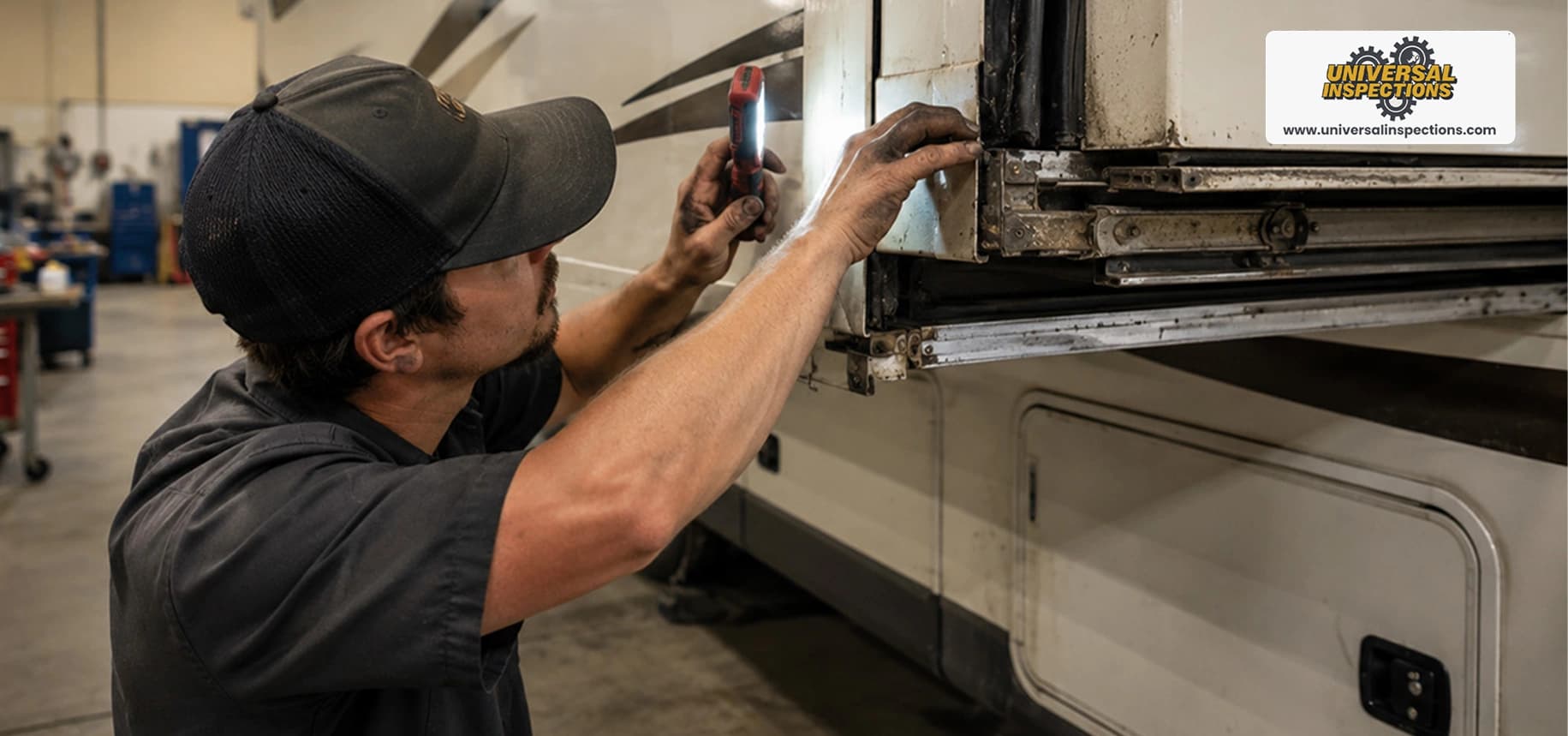
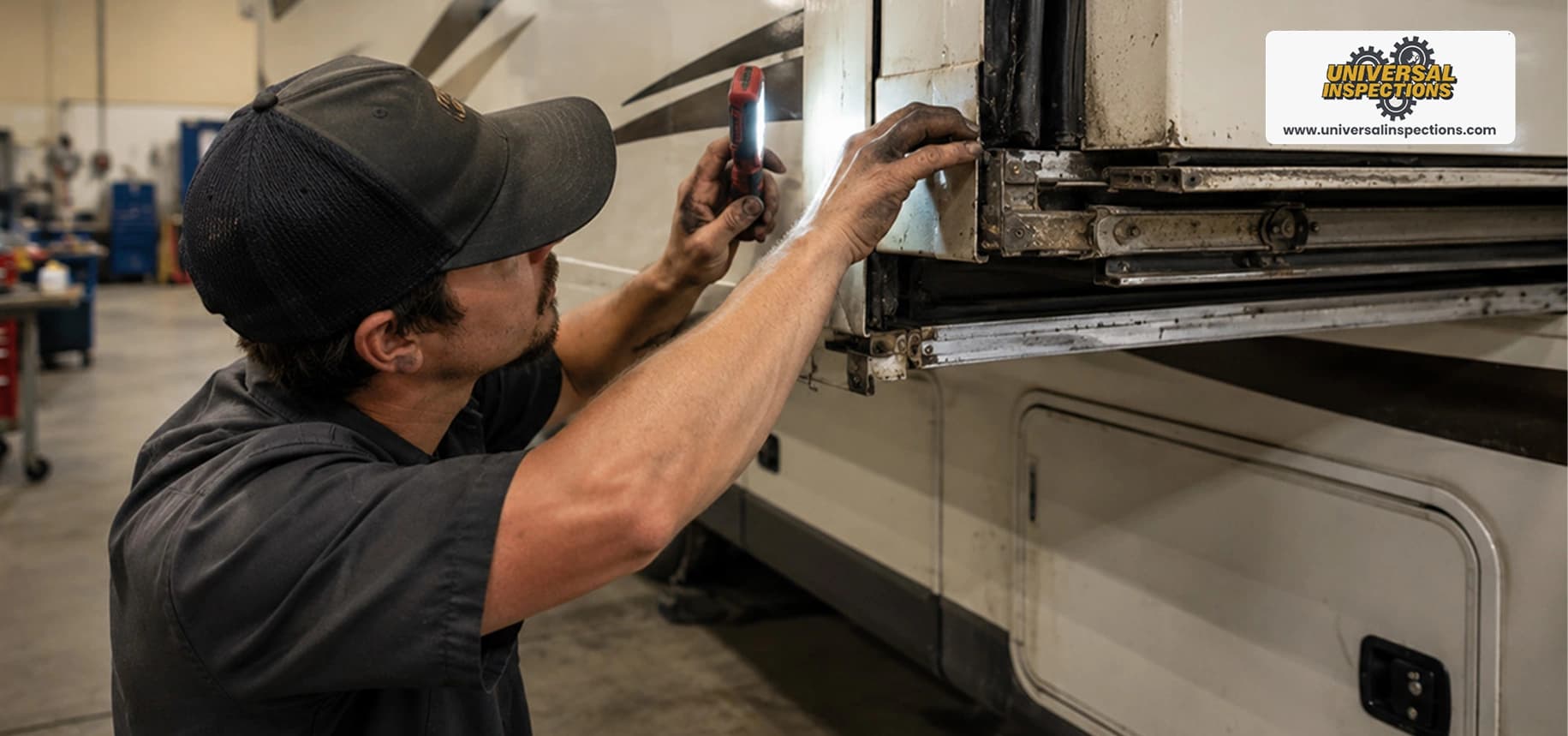
Imagine you’re buying a used RV. The interior looks spacious, the seller extends the slide-out, and everything seems fine. But then a question pops into your mind: what happens when it retracts? The slide-out extension seems fine now, but that doesn’t mean the system is. There might be underlying issues. This is where a pre-purchase RV inspection comes in handy.
Mechanical wear and tear aren’t always visible. Water intrusion can be hidden behind seals and flooring. Structural stress due to previous repairs is common for second-hand RVs. Thus, an RV pre-buy inspection is essential for long-term maintenance.
Summer heat and heavy rainfall can accelerate seal deterioration. That’s where slide-outs come in. Their seals keep rainwater, dust, and outside air from entering your RV. Check for the following during your pre-purchase RV inspection:
Visible cracks: Splits or tears along the rubber seals.
Flattened rubber: Perforated or damaged rubber; no tight barrier.
Loose edges: Peeling or detached seals around the slide-out.
Water stains: Discoloration near windows, walls, or flooring.
Uneven gaps: Inspect seals to ensure consistent contact when the slide-out closes.
RV pre-buy inspection should also check for uneven slide-out movement, which could indicate mechanical wear, misalignment, or damaged components. Check for the following:
Jerky movement: Sudden stops or shaking; signs of worn rollers or track problems.
Uneven extension: Uneven movement of the two slides, with one moving faster than the other.
Unusual resistance: Struggling or slowing due to mechanical strain.
Visible tilting: A crooked slide-out signaling damaged supports or alignment problems.
Incomplete movement: Failure to extend or retract fully; professional inspection required.
Notice any soft or spongy flooring near an RV slide-out? It could indicate hidden water damage or structural deterioration. During inspection, watch out for the following:
Spongy surfaces: unusually soft flooring, a result of weakened subflooring.
Discolored flooring: Dark stains or unusual patches due to previous water intrusion.
Swollen edges: Raised vinyl, warped wood, or bubbling flooring due to trapped moisture.
Musty odors: Persistent damp smells due to probable mold growth.
Previous repairs: Mismatched flooring or fresh patches.
Remember that RV slide-outs use motors, gears, or hydraulic systems to extend and retract. During your travel trailer pre-purchase inspection, look out for the following:
Grinding sounds: May indicate worn gears or damaged drive components.
Repeated clicking: Could suggest slipping gears or electrical issues.
Loud squeaking: May indicate dry rollers, friction, or misaligned tracks.
Straining motors: Excessive humming could signal resistance or motor problems.
Sudden banging: Unexpected knocks due to loose or damaged mechanical parts.

An RV's slide-out roof and corners are vulnerable to water intrusion, which can lead to expensive repairs. During a pre-purchase RV inspection, look for:
Cracked sealant: Gaps around roof edges.
Damaged corners: Cracks or separation from structural stress.
Standing water: Poor drainage increasing risks of leaks.
Debris buildup: Leaves and dirt trapping moisture against seals.
Water stains: Discoloration near upper corners due to previous leakage.
Not every RV slide-out problem is a dealbreaker. Therefore, evaluate the severity of the damage and potential repair costs. Here’s a list to help you make your decision:
Repair: For minor seal wear or loose fittings.
Negotiate: If you notice uneven movement, grinding noises, or damaged rollers.
Investigate further: If there’s soft flooring, moisture stains, or structural cracks.
Walk away: For extensive water damage, recurring leaks, or major structural issues.
Some checkups need professional help and guidance, as potential signs can fly under the radar for many people. Here’s the checklist for a professional pre-purchase RV inspection:
Slide-out seals and gaskets: A veteran checks accessible rubber seals for cracks, gaps, deterioration, or poor contact that could allow water intrusion.
Extension and retraction: A professional inspector checks whether the slide-out moves smoothly and closes evenly. They also check for unusual noises.
Moisture and water damage: Professionals inspect surrounding walls, flooring, and corners for stains, soft spots, musty odors, or other signs of previous leaks.
Structural alignment: They also search for visible sagging, uneven gaps, damaged supports, or signs of previous structural repairs.
Motors and mechanical components: An expert inspector checks accessible rollers, tracks, gears, or hydraulic components for visible wear and leaks.
Maintenance and repair history: Reviewing available service records for previous leaks, replacements, and repairs is also part of their job.
A spacious RV slide-out might look appealing. However, hidden leaks, worn seals, and mechanical problems can quickly turn into an expensive headache. Before signing the paperwork, make sure you're buying comfort, not costly surprises.
If you feel you need professional help, Universal Inspections can help you make a more informed purchase decision. Book a professional pre-purchase RV inspection today and get a clearer picture of your RV's condition before hitting the road.
Yes, an RV slide-out can have underlying damage such as leaks or stress from previous repairs. Therefore, you need to inspect before you invest.
Yes, older RVs may have worn slide-out seals, aging motors, misaligned tracks, or hidden water damage. So, a professional pre-purchase RV inspection can help identify these issues and estimate potential repair needs.