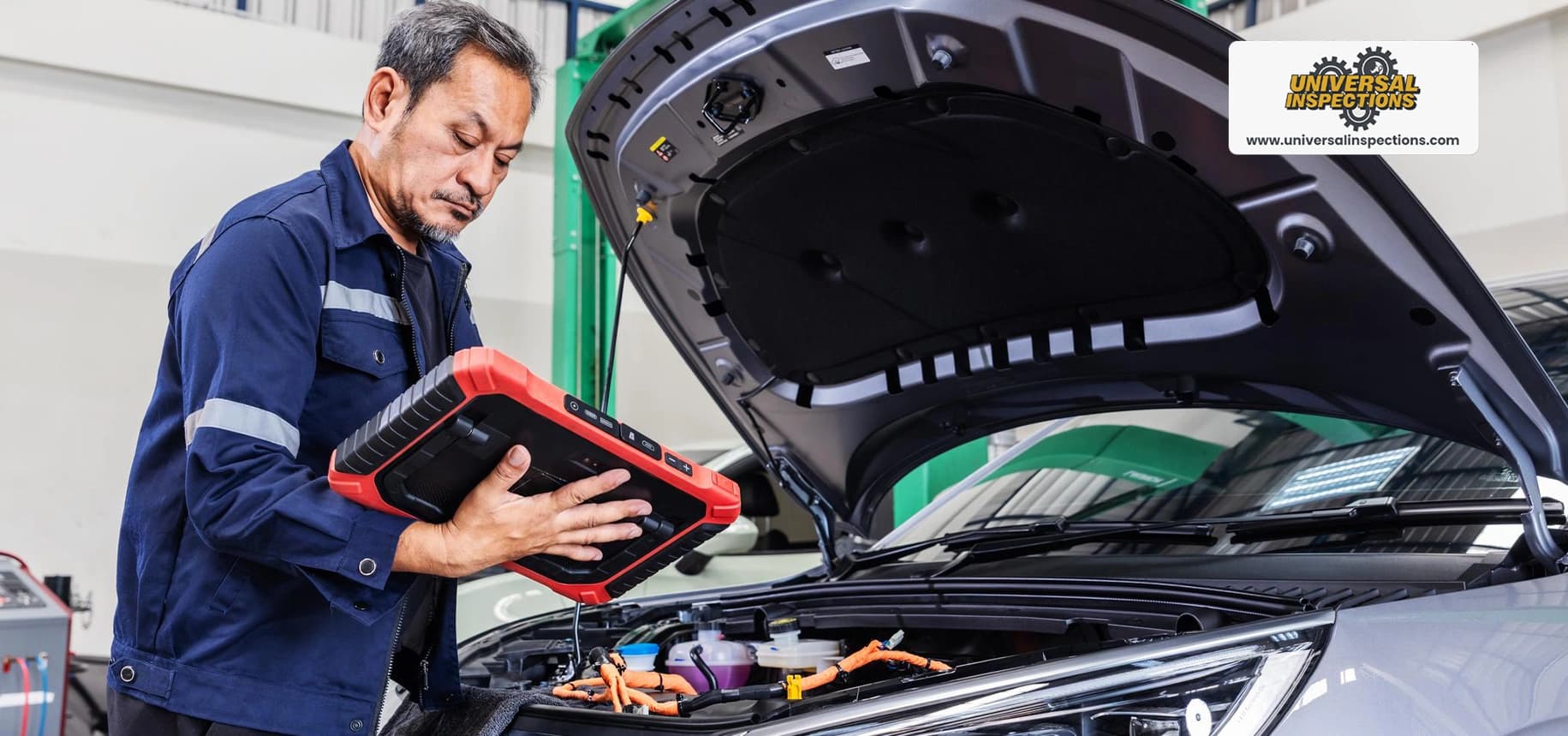
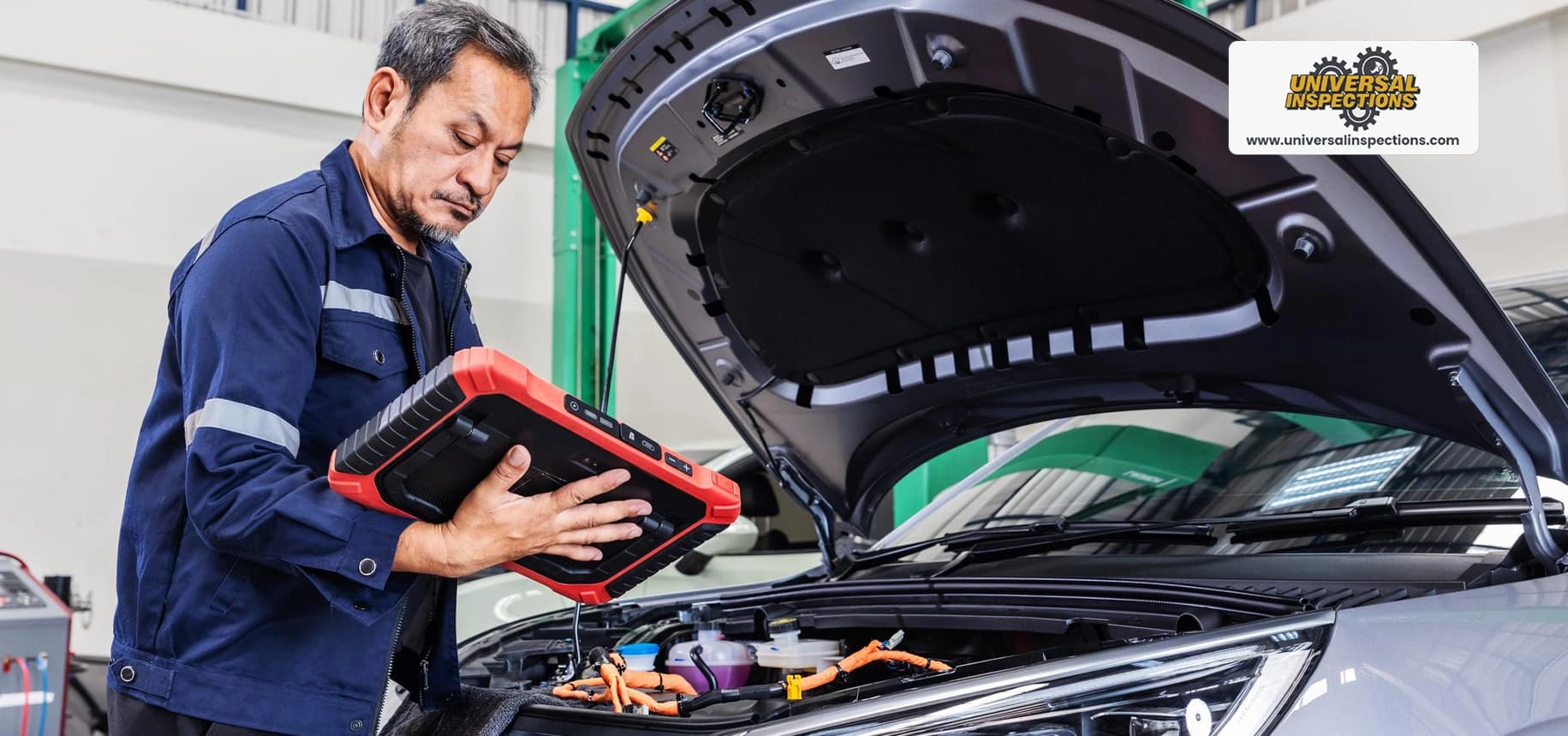
Have you bought a secondhand EV, judging by the battery percentage, and thought it was working well? You’re not alone. Most EV owners mistakenly assume a charged battery indicates its working condition. That’s not the case. A pre-purchase car inspection could help you spot the problems beforehand.
A pre-purchase inspection for EVs helps owners evaluate the car's condition holistically, not only the batteries. Problems with the battery cooling system, electronic features, and charging port can manifest anytime. A pre-purchase inspection sends expert technicians to identify the issues before they get serious.
EV that drives perfectly but refuses to charge properly is an expensive surprise nobody wants. Therefore, during a pre-purchase car inspection, checking the charging system is just as important as assessing battery health. Here’s what expert inspectors check:
Damaged charging port: Bent pins, corrosion, cracks, or signs of overheating around the charging connector, which could indicate previous damage or charging problems.
Interrupted charging: Repeatedly hindered charging during charging sessions or signs of display error messages, which are signs of issues with the charging port or equipment.
Slow AC charging: Unusually slow or failed AC charging; professional onboard inspection required.
DC fast-charging issues: Slow or interrupted DC charging at compatible fast-charging stations, which could be signs of DC component damage.
Charging cable connection: Checking connector fittings and the vehicle's charging-port locking mechanism’s condition.
EV batteries rely heavily on dedicated liquid cooling and heating loops to stay within optimal operational temperatures. Internal or external coolant leaks can dry out, causing battery damage, which will cost roughly $1,200 to repair. Here’s what EV battery health experts suggest to look for:
Coolant leaks: Unusual fluid stains or puddles underneath the vehicle; better with expert pre-purchase car inspection services
Battery temperature warnings: Signs for overheating alerts or cooling-system error messages; could indicate problems with temperature sensors and pumps.
Unusual fan or pump noises: Persistent grinding, rattling, or unusually loud noises
Unexpected charging slowdowns: Indication of thermal management issue
Cooling system maintenance history: Servicing, repair, and replacement record of coolant, pumps, valves, or other cooling components
EVs typically use an electric drive motor instead of traditional gasoline engines or multi-speed automatic transmissions. However, that doesn’t mean they are free from problems. To prevent expensive repairs, here’s what you should look for:
Unusual whining or grinding noises: Excessive whining, grinding, or clicking sounds while accelerating or slowing down; could indicate worn bearings and gears.
Vibrations during acceleration: Shaking, jerking, or unusual vibrations; could point towards damage to motors and axles.
Gearbox fluid leaks: Oily spots underneath the vehicle or around the drive unit; could damage the engine.
Delayed or uneven power delivery: Unexpected loss of power or hesitant or inconsistent response; could be an electronic control issue.
Drivetrain warning messages: Dashboard alerts related to the motor, power delivery, or electrical drive system.
Regenerative braking happens when the car slows while recovering power and sending some energy back to the battery, instead of relying on traditional brakes. However, that does not mean it is free from maintenance. Here are some aspects to keep an eye on during your pre-purchase inspection:
Rusty brake discs: Could affect braking performance.
Sticking brake calipers: Uneven braking, unusual noises, or the vehicle pulling to one side when stopping.
Uneven brake pad wear: Could indicate problems with calipers, brake hardware, or other components.
Unusual braking behavior: Jerking, vibrations, grinding noises, or inconsistent braking responses; could indicate problems with the conventional braking system.
Regenerative braking warnings: Dashboard brake-system alerts or regenerative braking errors.
A faulty climate control system can affect your comfort and driving range. Additionally, it could indicate issues with battery temperature management. Here’s what to look for:
Weak air conditioning: Weak airflow or warm air in the coolest setting; could indicate refrigerant leaks or compressor problems
Poor cabin heating: Proper inspection needed for consistent warm air production
Unusual compressor noises: Excessive buzzing, grinding, or rattling when the heating or cooling system operates
Reduced driving range: Unusually high energy consumption or poor climate performance; may need proper pre-purchase car inspection by experts
Heat pump and climate control warnings: Inspection for temperature-control errors or system alerts
From touchscreen controls to automatic emergency braking and lane-keeping assistance, software and electronics in the electric cars need maintenance. Here’s what pre-purchase car inspection experts suggest to look out for:
Dashboard warning messages: Alerts related to cameras, parking sensors, lane assistance, or automatic emergency braking; may need calibration
Faulty cameras and parking sensors: Blurry images, delayed responses, or sensors that fail to detect nearby objects during reversing camera and parking assistance features test
Outdated software: Pending updates or unresolved software-related recalls regarding performance, security, and system reliability
Driver-assistance calibration issues: May require recalibration for cameras and radar sensors after windshield replacement, collision repairs, or certain suspension work
Missing or restricted features: Confirmation regarding advertised features remaining available after ownership transfers
Touchscreen and connectivity problems: Testing navigation, Bluetooth, climate controls for frozen screens, frequent restarts, or unresponsive controls
A pre-purchase car inspection for EVs can reveal the status of EV battery health, charging system, car components, software, and electronics. Here’s what a diagnostic scan can tell you about your car in detail:
State of Health (SoH): Shows the battery's permanent chemical health and remaining capacity
Individual Cell Voltages & Delta: Displays the voltage of every single cell inside the battery pack to spot "weak cells"
True Usable Capacity (kWh): Reports the actual energy the battery can hold right now
Charging History & Cycle Count: Tracks how many total charge cycles have been completed; breakdown of standard AC versus fast DC
Battery & Component Temperatures: Monitors live thermal data for the battery pack, drive units, and cooling loops
Diagnostic Trouble Codes (DTCs): Error codes for the Electric Vehicle Control Unit (EVCU), Battery Management System (BMS), inverter, and regenerative braking system
Sub-system Status: Checks non-high-voltage and supporting modules

Consider requesting a specialist EV inspection if you notice:
Unclear battery health: Missing or inconsistent battery-health information.
Charging problems: Repeated charging interruptions or unexplained errors.
Underbody damage: Dents or impact marks near the battery enclosure.
High-voltage warnings: Dashboard alerts involving the battery or electrical system.
Previous major repairs: A history of battery replacement, drive motor repairs, or electrical failures.
A used EV might look like a great deal, but a healthy battery doesn't always mean a trouble-free ride. Charging problems, cooling-system faults, worn brakes, faulty sensors, and several hidden issues could lead to unexpected repair bills. Consider scheduling a pre-purchase car inspection for proper diagnostic scans to evaluate the car’s condition.
Buying a used EV anywhere in Alabama? Let Universal Inspections help you make a more informed decision. Book a professional vehicle inspection today, and ask about the EV-specific checks available for your vehicle.
Yes. Charging components, cooling systems, drive motors, brakes, and electronics can develop problems independently of battery health.
Yes. A pre-purchase car inspection can help identify potential issues with the charging system, brakes, drivetrain, and electronics. Consequently, it reduces the risk of unexpected repair expenses after purchase.
Universal Inspections offers pre-purchase vehicle inspections in Alabama. Visit Universal Inspections to request an appointment.