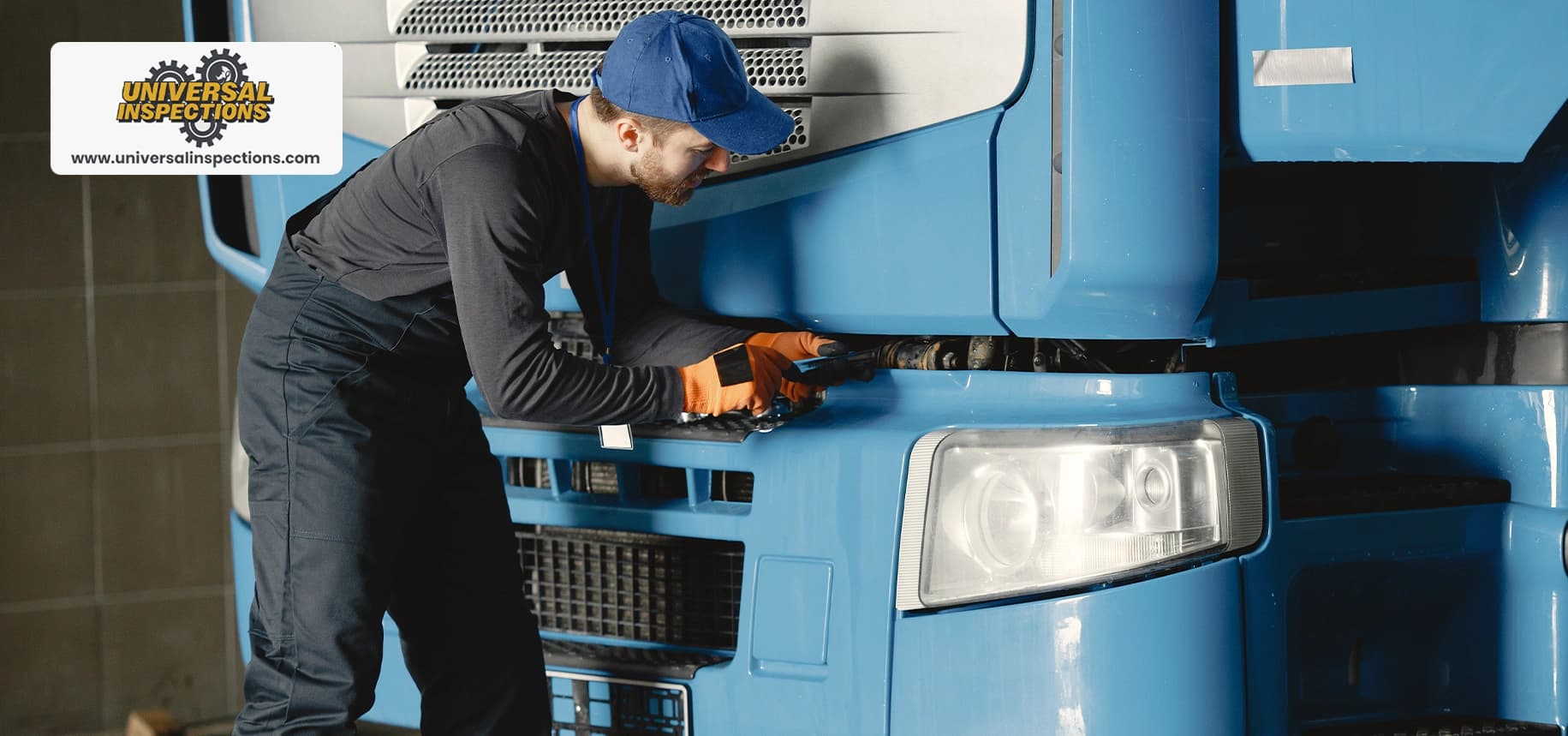
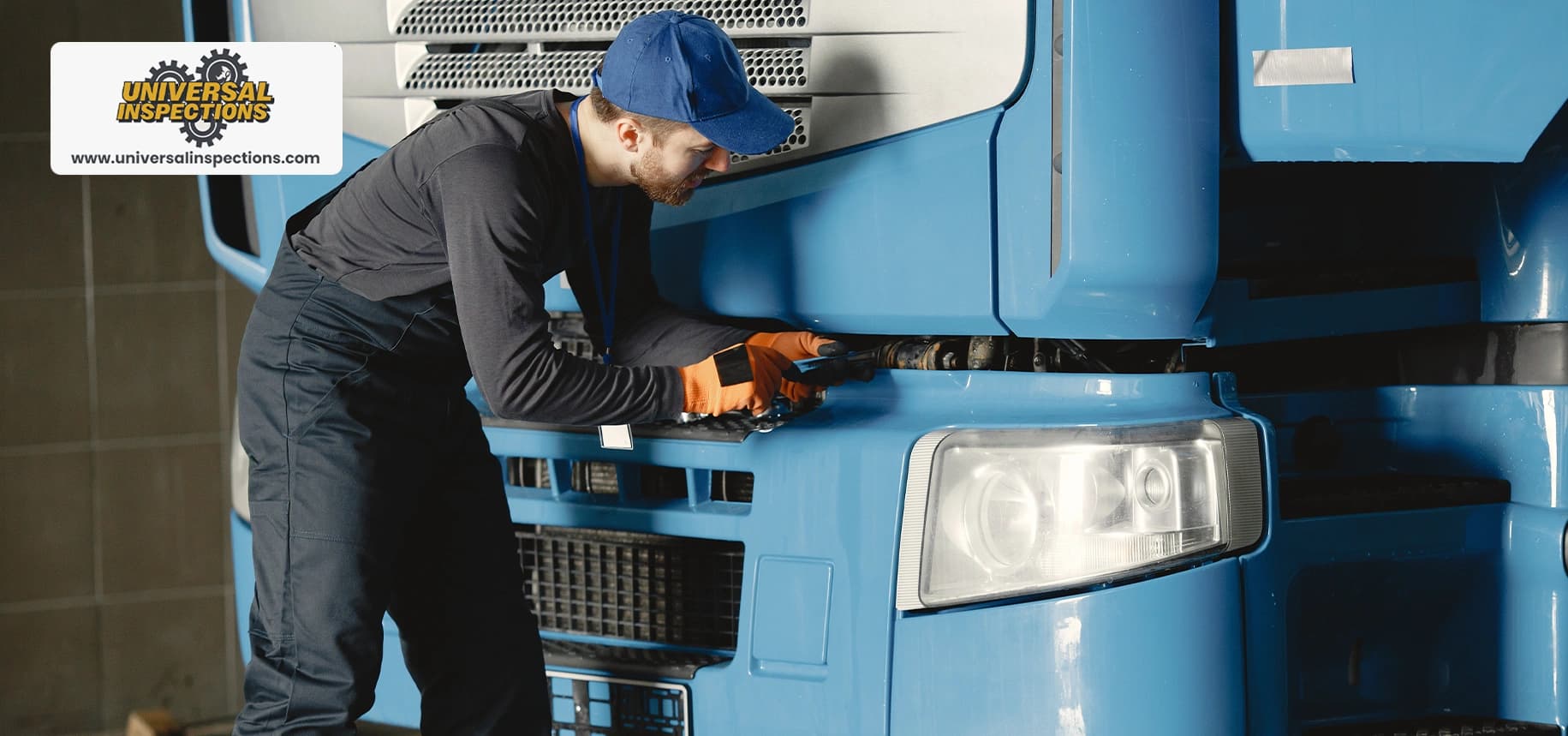
A used semi-truck usually costs somewhere between $50,000 - $150,000. That’s not just a big number, it’s a purchase that will shape your income and your operating costs for the next 3 to 7 years. Skip the inspection, and you’re gambling with all of it.
Hidden engine trouble, worn-out transmissions, weak brakes, or a cracked frame can hit you with $20,000 to $50,000+ in repairs itself. It can happen anytime even if you’ve handed over the money. A pre-purchase commercial vehicle inspection is how you protect the investment before you make it.
In this blog, we will discuss what to inspect and who should perform the inspection.
Don’t just choose anyone with a wrench. For getting a proper inspection done, you must keep the following points in mind:
Hire an independent heavy-duty diesel mechanic.
Avoid dealer mechanics inspecting their own vehicles.
Set aside a budget of $300-$500 for a professional pre-purchase inspection.
Always ask for a written report with specific findings and repair cost estimates.
Inspect in daylight, somewhere the truck can be lifted. Shadows and a low angle hide a lot of problems.
Before anyone touches a wrench to the truck, check the story behind it.
Match the VIN on the title, the door jamb, and the frame rail. If they don’t agree, stop there.
Confirm the title isn’t salvage or rebuilt, and check for active liens.
Request the full maintenance history. A well-documented oil-change record on a diesel engine is worth its weight in gold.
Review the DOT inspection history and ask about any out of service orders.
Gaps in paperwork aren’t automatically a dealbreaker. If you find gaps, slow down. Missing records may indicate unknown maintenance risks and can also give you additional leverage during negotiations.
The engine is the single most expensive part to fix, so it deserves the most attention.
Cold start test - Insist on starting the truck yourself, cold. Long cranking, heavy smoke or knocking on startup may indicate internal wear or other mechanical issues.
Listen for unusual noises. Ticking lifters or a rattling turbocharger can be red flags.
Check for blow-by. Excessive pressure or smoke from the breathers may indicate worn piston rings or cylinder liners.
Send an oil sample for lab analysis if possible. It can reveal signs of coolant, fuel or metal contamination long before obvious symptoms appear.
Check turbo boost pressure and compression.
Review the engine data plate and match it against the listing. A swapped engine actually changes what you’re buying.
Whether it’s manual or automated, the transmission should shift clearly through every range.
Check for smooth engagement with no hesitation or harsh shifts.
Look for leaks at the pan, input shaft, or output shaft seals.
Check clutch condition and adjustment.
For Automated Manual Transmissions (AMTs), pull stored fault codes through the diagnostic port. These issues often show up here before they ever affect drivability.
During a pre-purchase vehicle inspection, these systems don’t always show obvious signs. Make sure to check:
Brakes - Check shoe or pad thickness, drum condition, slack adjuster travel, and the air system for leaks.
Frame- Inspect crossmembers and cab mounts for cracks, and learn to tell surface rust from actual rust-through.
Electrical- Confirm all lights work and there’s no chronic battery drain or charging issue.
Modern trucks keep detailed digital records. They are one of the most reliable ways to catch problems a visual inspection might miss.
A technician can connect diagnostic tools to check active and stored fault codes.
Review idle hours versus driving hours. Remember high idle time wears an engine differently than actual road miles, even if the odometer looks low.
Run the VIN through commercial truck history services to check for title issues, odometer discrepancies or undisclosed accident history.

Reading a checklist is one thing. Having a certified, independent inspector conduct a pre-purchase vehicle inspection is another. That’s where we come in.
Local Coverage: We serve buyers across Woodstock, Tuscaloosa, Birmingham, Montgomery, and other cities in Alabama. So, you can get a qualified inspector out to a truck near you without the runaround.
Independent and Unbiased Inspectors: Our technicians have no financial stake in the sale. Thus, you will get an honest evaluation during a semi-truck inspection.
Full Mechanical Inspections: Cold-start engine diagnostics, blow-by and compression checks, transmission and clutch condition, brake and air evaluation, and frame integrity checks.
Electronic Diagnostics: We pull active and stored fault codes and review idle-versus-driving hour ratios to catch issues a visual check alone would miss.
Commercial and Heavy Equipment Coverage: Beyond semi-trucks, we inspect farm and heavy equipment, corporate fleets, RVs, marine, and motorcycles.
Detailed Written Reports: Every inspection ends with a clear and easy-to-understand report outlining findings and estimated repair costs. So, you know exactly what you’re negotiating with.
Flexible Scheduling: We can inspect at your location or ours, whatever fits your timeline.
Whether you’re an owner-operator adding your next truck or a fleet manager expanding your operation, Universal Inspections gives you the clarity you need to buy with confidence.
You aren’t looking for a flawless used truck. You’re looking for a truck whose condition, risks, and likely repair costs you understand before signing the paperwork. Check your used semi-truck’s paperwork, engine, drivetrain, brakes and frame. Then book an appointment with Universal Inspections for a pre-purchase commercial vehicle inspection. This one single step can separate a smart purchase from an expensive mistake.
A pre-purchase commercial vehicle inspection is a complete evaluation conducted by an independent technician before buying a used commercial truck or fleet asset. It assesses mechanical health, electronic fault codes, air brake systems, frame integrity, and paperwork to uncover hidden repair costs before closing the sale.
A professional pre-purchase vehicle inspection for a semi-truck or commercial vehicle typically costs between $300 and $500. An inspection may help uncover major engine, transmission, or structural problems that could otherwise result in thousands or potentially tens of thousands of dollars in repairs.
Upon completion, you will receive a detailed and written report about the vehicle. It outlines the vehicle’s mechanical condition, active and stored electronic fault codes, frame evaluation and estimated repair costs. You can use the report to understand potential repair expenses and negotiate the purchase price more confidently.